Medical waste compliance can be complicated, especially when healthcare facilities encounter regulatory terms that are not always clearly understood. One of the most important examples is PIMW, or Potentially Infectious Medical Waste.
For healthcare providers throughout Illinois, understanding what qualifies as PIMW is essential for maintaining compliance, protecting employees, and ensuring public safety. Improper classification or disposal can result in regulatory violations, workplace hazards, and unnecessary disposal costs.
Whether you operate a physician’s office, dental practice, veterinary clinic, laboratory, or long-term care facility, knowing how to manage PIMW properly is a critical part of your overall waste management strategy.
What Does PIMW Mean?
PIMW stands for Potentially Infectious Medical Waste, a term commonly used in Illinois regulations to describe medical waste that may contain infectious agents capable of causing disease.
While many people use terms such as “medical waste,” “biohazard waste,” and “regulated medical waste” interchangeably, Illinois specifically regulates PIMW through state requirements designed to protect healthcare workers, waste handlers, and the public.
According to AMS Med Waste, PIMW is often referred to as regulated medical waste (RMW) or red bag waste and includes materials generated during the diagnosis, treatment, or immunization of humans and animals.
What Materials Are Considered PIMW?
Many healthcare facilities generate PIMW every day without realizing how broad the category can be.
Common examples include blood-soaked bandages, contaminated personal protective equipment (PPE), cultures and laboratory specimens, contaminated IV tubing, pathological waste, and other materials exposed to potentially infectious bodily fluids.
The key factor is whether the waste has the potential to transmit infectious disease.
This is why proper waste identification and segregation are so important. When waste is incorrectly classified, facilities may either increase disposal costs unnecessarily or create compliance risks by placing infectious materials into the wrong waste stream.
Why Proper Waste Segregation Matters
One of the most common compliance challenges healthcare facilities face is improper waste segregation.
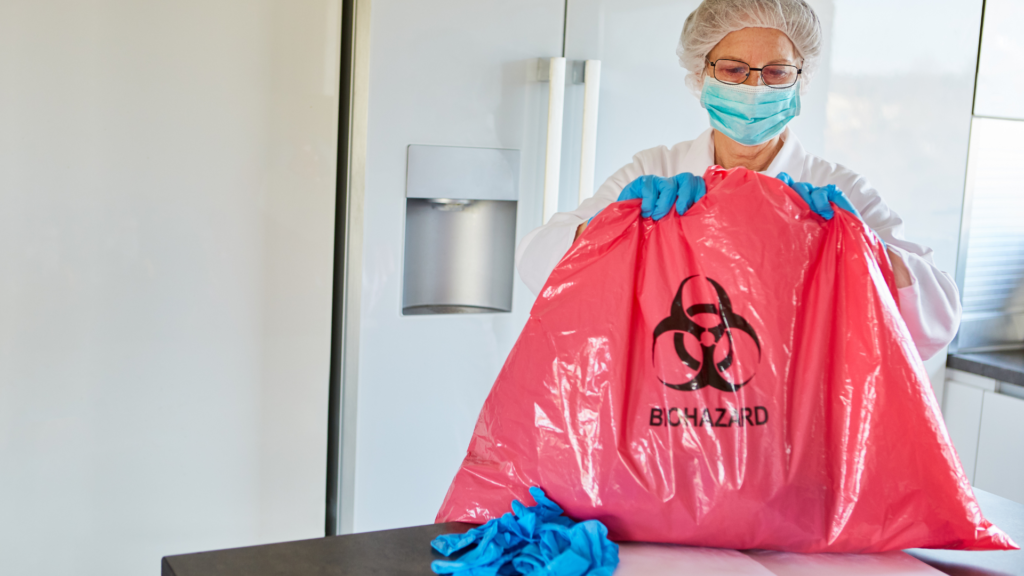
Not every item generated in a healthcare setting belongs in a red biohazard container. When general trash is mixed with regulated medical waste, disposal costs often increase because regulated waste requires specialized transportation and treatment.
Conversely, placing infectious waste into regular trash containers can expose staff and waste handlers to unnecessary risks.
AMS Med Waste emphasizes waste segregation guidance as part of its compliance support services, helping facilities properly categorize waste streams and select the correct containers.
A well-trained staff can significantly reduce both compliance risks and disposal expenses.
Who Generates PIMW?
Many people assume that only hospitals generate regulated medical waste. In reality, a wide range of organizations produce PIMW.
Physician offices, urgent care centers, dental practices, veterinary clinics, blood banks, schools, laboratories, long-term care facilities, and even tattoo parlors may generate regulated medical waste requiring proper disposal.
As healthcare delivery continues expanding into outpatient and specialty care settings, more facilities are finding themselves subject to medical waste regulations.
Even smaller generators must follow applicable state and federal requirements.
How Is PIMW Stored and Transported?
Proper storage begins with selecting the correct container.
AMS provides multiple container types and sizes based on the volume and type of waste generated by each facility. These include reusable medical waste containers, sharps containers, pharmaceutical waste containers, and chemotherapy waste containers.
Once waste is collected, transportation must be performed by licensed medical waste haulers using approved procedures and documentation. Medical waste is tracked throughout the collection and disposal process to ensure accountability and regulatory compliance.
This documented chain of custody helps healthcare providers demonstrate compliance during inspections or audits.
Compliance Is About More Than Disposal
Many facilities think about compliance only when waste is picked up.
In reality, compliance begins long before a medical waste container leaves the building.
Employee training, waste identification, container placement, labeling, and storage procedures all contribute to an effective compliance program. AMS provides compliance support and customer education to help facilities understand their responsibilities and maintain safe waste management practices.
Regular training can help reduce mistakes while ensuring employees understand how to handle potentially infectious materials safely.
Sustainability Is Becoming Part of the Conversation
Healthcare providers are increasingly looking for environmentally responsible alternatives to traditional disposal methods.
AMS differentiates itself through a sustainability-focused approach that avoids sending treated medical waste directly to landfills. Instead, treated medical waste is converted into a fuel source that can replace coal in cement kilns through approved treatment processes.
For organizations seeking both compliance and environmental stewardship, sustainable medical waste management can support broader operational goals.
Choosing the Right Medical Waste Partner
Medical waste compliance is not something healthcare facilities should have to navigate alone.
A qualified provider should offer reliable collection services, regulatory expertise, employee education, secure containers, flexible pickup schedules, and responsive customer support.
AMS Med Waste serves healthcare facilities throughout Northern Illinois and Southern Wisconsin with customized medical waste disposal programs designed to fit each organization’s needs. Their services include medical waste disposal, sharps disposal, pharmaceutical waste disposal, chemotherapy waste disposal, compliance support, and scheduled pickups.
Compliance in PIMW
Understanding PIMW is one of the most important aspects of medical waste compliance in Illinois.
By properly identifying, segregating, storing, and disposing of potentially infectious medical waste, healthcare facilities can protect employees, maintain compliance, and reduce unnecessary risk.
As regulations continue to evolve, partnering with an experienced medical waste provider can help ensure your facility remains safe, efficient, and compliant.
Contact AMS Med Waste today to learn more about customized medical waste disposal programs, compliance support, and sustainable waste management solutions for healthcare facilities throughout Northern Illinois and Southern Wisconsin.