Healthcare facilities in Northern Illinois and Southern Wisconsin generate multiple types of medical waste every day, yet many clinics still struggle with proper classification. Misclassifying waste doesn’t just increase disposal costs; it can also lead to OSHA citations, DOT violations, and state-level penalties.
This guide breaks down the three most commonly confused medical waste categories: red bag waste, sharps, and pathological waste, so healthcare providers, dental offices, vet clinics, and outpatient practices can stay compliant and operate efficiently.
AMS Med Waste serves the entire region with fully compliant, dependable medical waste pickup, helping facilities understand, package, and dispose of each waste stream correctly.
Why Correct Waste Classification Matters
Improper segregation can cause:
• Higher Disposal Costs
Red bag waste costs significantly more to process than regular trash. If non-infectious materials go into red bags, clinics pay far more than necessary.
• Regulatory Penalties
Illinois and Wisconsin follow strict guidelines enforced by OSHA, DOT, and state public health agencies. Incorrect packaging or mixing waste streams can trigger fines.
• Staff Injuries
Improperly disposed of sharps or improperly sealed pathological waste creates a serious risk for employees and patients.
• Delays in Pickup or Accepted Waste
Medical waste companies may refuse waste that is incorrectly packaged or mislabeled.
Clear waste segregation is one of the easiest ways a facility can improve safety, compliance, and cost efficiency.
What Is Red Bag Waste?
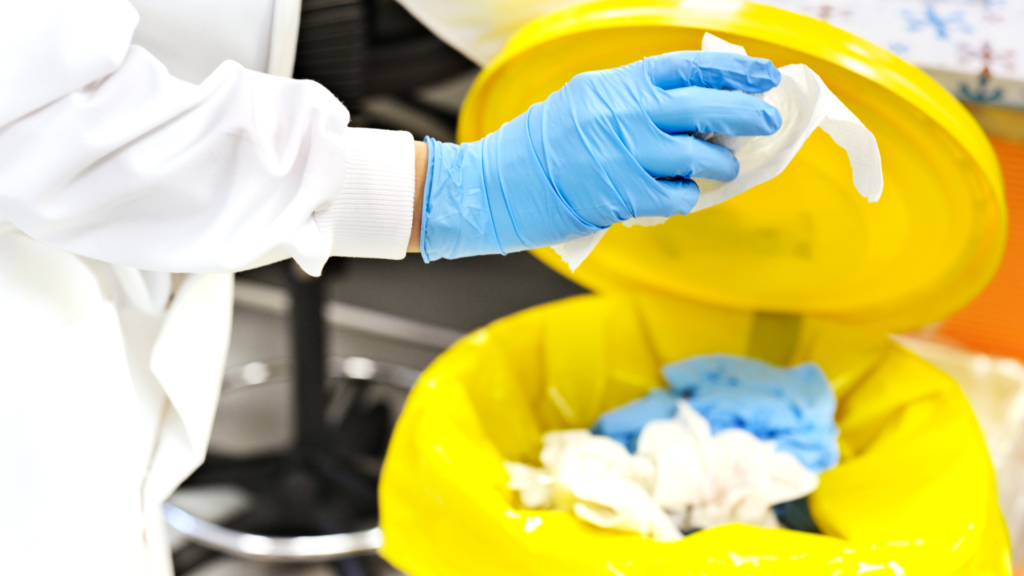
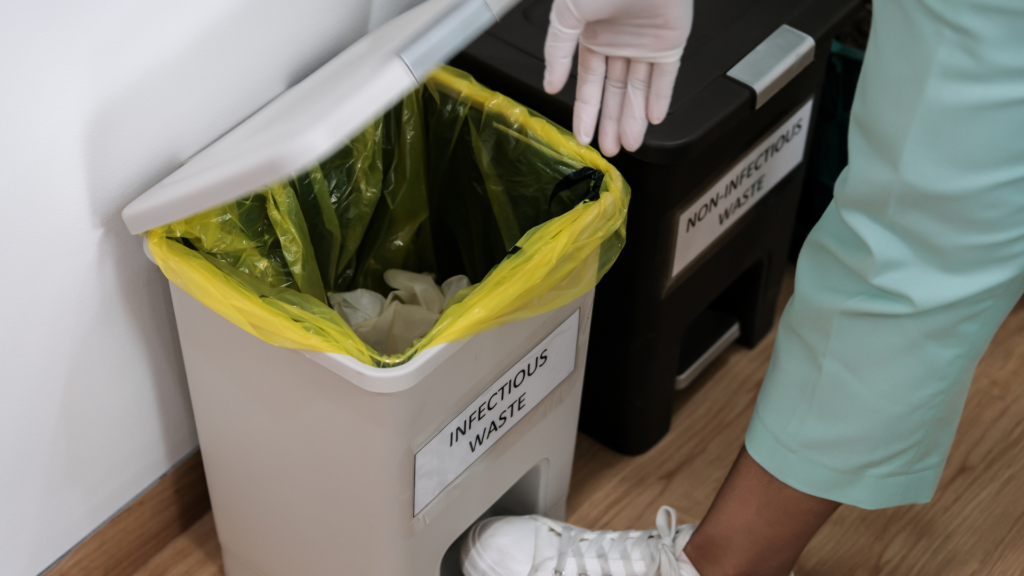
Red bag waste, also called biohazardous waste or regulated medical waste (RMW), includes materials contaminated with blood, bodily fluid, or other potentially infectious substances.
Common Red Bag Waste Examples
- Blood-soaked gauze, bandages, or dressings
- PPE used during treatment (gloves, masks, gowns)
- Suction canisters containing bodily fluids
- Disposables used in minor procedures
- Lab items contaminated with infectious materials
What Does NOT Belong in Red Bags?
This is where many clinics make mistakes. The following items should not go in red bags:
- Paper towels that are used for cleaning surfaces
- Packaging materials
- Food waste
- Uncontaminated gloves
- General trash
- Sharps of any kind
Misclassification is expensive because red bag waste requires specialized treatment, typically autoclaving or incineration.
Illinois & Wisconsin Notes
Both states require red bag waste to be:
- Leak-proof
- Labeled with biohazard markings
- Tied securely
- Stored in designated containers
For further reference, Illinois providers can consult the Illinois Environmental Protection Agency (IEPA), and Wisconsin providers can consult the Wisconsin DNR.
What Are Sharps?
Sharps include any item capable of puncturing the skin. These must ALWAYS go into a puncture-resistant, rigid sharps container, even if they are unused.
Common Sharps Examples
- Needles
- Syringes
- Scalpel blades
- Lancets
- Broken glass contaminated with blood
- IV tubing with needles attached
Sharps Disposal Requirements
In Illinois and Wisconsin, sharps must be:
- Placed immediately into an approved sharps container
- Kept upright and replaced once filled to ¾ capacity
- Sealed before pickup
- Given only to a licensed medical waste hauler such as AMS
Sharps are the #1 cause of staff injuries, making proper management essential for workplace safety.
What Is Pathological Waste?
Pathological waste includes human or animal tissues, organs, body parts, and surgical specimens. This category often requires incineration, not autoclaving.
Examples of Pathological Waste
- Human tissues removed during surgery
- Animal tissues from veterinary clinics
- Biopsy materials
- Organs, body parts, or surgical specimens
Packaging Pathological Waste
Pathological waste must be:
- Double-bagged
- Placed in rigid, leak-proof containers
- Clearly labeled
- Kept separate from standard red bag waste
Because this waste type includes biologically sensitive material, state regulations are strict, and mixing with standard medical waste is prohibited.
Red Bag Waste vs. Sharps vs. Pathological Waste: Quick Comparison
| Waste Type | Includes | Packaging Required | Notes |
| Red Bag Waste | Contaminated PPE, gauze, fluid-soaked disposables | Red biohazard bags | Most common waste stream |
| Sharps | Needles, blades, lancets | Rigid sharps container | Never place in red bags |
| Pathological Waste | Tissues, organs, surgical specimens | Leak-proof, rigid containers | Often requires incineration |
How AMS Med Waste Helps Clinics Stay Compliant
AMS Med Waste works with healthcare facilities across Northern Illinois and Southern Wisconsin to build a simple, compliant, cost-efficient medical waste program.
Scheduled & On-Demand Pickups
Ideal for clinics, veterinary offices, dental practices, and labs that generate recurring waste.
Proper Waste Segregation Guidance
We train your staff on what goes where, so you avoid compliance issues and unnecessary costs.
Sharps Management Programs
Including container delivery, replacement, and pickup.
Compliance Support
We help you stay aligned with state and federal regulations, including OSHA, DOT, and state health codes.
Transparent Pricing With No Hidden Fees
Local service, predictable rates, and dependable scheduling.
When In Doubt, Ask.
Misclassification is one of the most common issues we see. If your facility is unsure whether an item belongs in red bag waste, sharps, or pathological waste, AMS Med Waste will audit your waste streams and provide clear guidance tailored to your workflow.
Get Reliable Medical Waste Disposal for Illinois & Wisconsin
AMS Med Waste is dedicated to keeping clinics, dental offices, veterinarian practices, and healthcare facilities compliant, safe, and efficient. Whether you generate a small amount of waste or require recurring pickups across multiple locations, we make medical waste management simple and dependable.
Ready to simplify your medical waste program? Contact AMS Med Waste today to schedule a consultation or request a quote: